
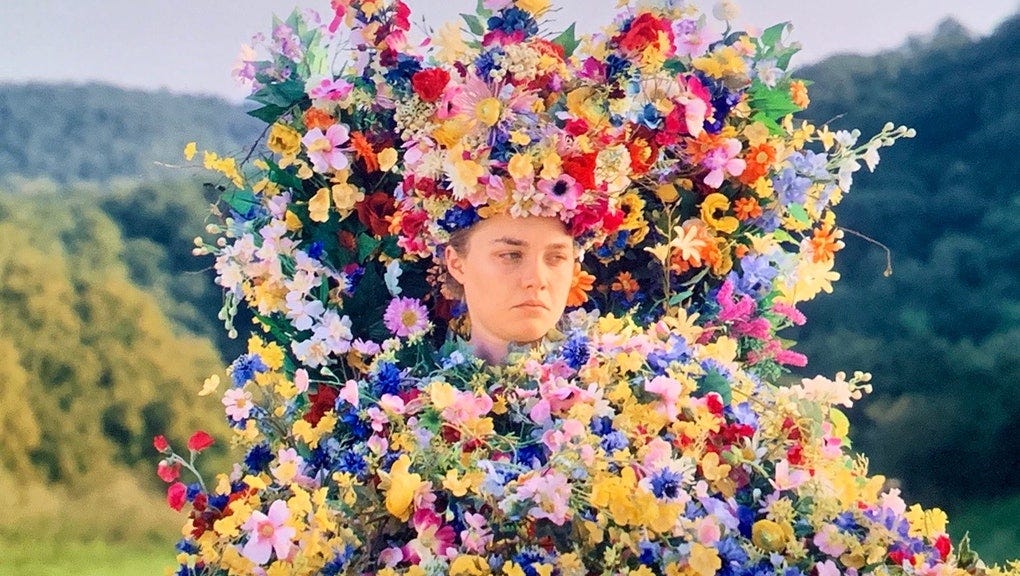
In 2017, Ari Aster absolutely mesmerized audiences with his debut movie, Hereditary. Fast forward to today, and his latest creation, Midsommar, fearlessly delves into themes of grief and spirituality in a profoundly unsettling manner. Through meticulous staging and intricate art direction, both films offer a glimpse into the director’s inner world. Aster fearlessly pushes the boundaries of genre elements, presenting startlingly fresh interpretations that may not always seamlessly integrate into the narrative. Each film boasts its own distinctive style, with Hereditary immersing viewers in darkness while Midsommar uncovers horror beneath an ostensibly idyllic facade.
Aster’s masterful manipulation of emotion is strikingly apparent in Midsommar. The protagonist, college student Dani (Florence Pugh), grapples with profound grief following a family tragedy. Seeking solace from her distant boyfriend Christian (Jack Reynor), she becomes aware of his intention to end their relationship through conversations with his friends – charismatic Pelle (Vilhelm Blomgren), inquisitive Josh (William Jackson Harper), and brash Mark (Will Poulter). Sensing Dani’s distress, Christian alters his plans and invites her to accompany him on a journey to Pelle’s secluded religious community in rural Sweden. The palpable sense of foreboding is unmistakable from the start, heightened by Dani’s profound depression. This not only threatens to overshadow the planned festivities of the friends, but also engulfs the film’s opening with an almost unbearable unease long before the anticipated horrors unfold.
“The Harga” visit in “Midsommar” escalates into an incredibly intense and unsettling experience. The movie delves deep into themes of ritual, religion, and a cult-like mindset, shining a spotlight on the community’s questionable customs. Yet, the true power of the film extends far beyond its disturbing scenes, making it unsuitable for some viewers. Dani’s heart-wrenching realization of being an unwanted outsider shatters her world, ultimately leading to an unexpected and profound transformation.
Midsommar exudes an undeniable power as it delves deep into the intricate complexities of human existence. Through its compelling narrative, the film masterfully portrays the intense quest for belonging that drives lost souls. It artfully unravels the profound impact of religion in filling the emotional void, often without individuals even realizing it. Furthermore, Midsommar vividly illustrates the perilous convergence of group mentality and personal turmoil, forging a chilling yet compelling form of happiness that can abruptly descend into darkness, even amidst the radiant light of day.
Dani, played by Pugh, delivers an outstanding performance in this role. She evolves from a guilt-ridden and obscure persona into a determined individual seeking revenge, showcasing both vulnerabilities and strengths. As the plot unravels, Aster and Pugh masterfully illustrate Dani’s transformation with such precision that one cannot help but admire and critique her. Her emotional journey garners support while her questionable decisions provoke disapproval.
Midsommar unleashes its most potent power as it delves into the lengths disoriented individuals are willing to go to in order to find a profound sense of belonging. It passionately explores the profound impact of religion in filling voids that some people are unaware of having, shedding light on how the combination of mob mentality with the underlying personal disappointments and tragedies of each individual can lead to a bankrupt ecstasy that delves into darkness, even amidst the brightness of day.
Aster is passionate about revealing the nuanced aspects of spirituality. Rather than spoon-feeding answers, he ignites thought-provoking discussions. He believes in the power of showing, not telling, allowing audiences to unravel the truth themselves. Dani’s compelling story sparks fervent conversations about discovering warmth in a seemingly cold world, striving to mend within a flawed system, and the peril of neglecting spiritual potential, succumbing to anger, and losing touch with reality.
The movie Midsommar is packed with so much depth and meaning that it may take a keen eye to fully grasp all its intricacies. From the intense rivalry between Christian and Josh to the subtle exploration of racial issues, there’s a lot to unpack. However, amidst all this, Dani stands out as a powerful symbol of women overcoming mistreatment. Florence Pugh’s performance, particularly in the closing scene, beautifully captures the essence of liberation. It’s a truly moving experience that leaves the audience feeling empowered and uplifted.
Tanya Natazsha
Thank you for reading my content. I’m glad that you’ve immersed yourself in my article and I genuinely hope you found something that resonated with you on a deeper level. I curated this website which is a cozy sanctuary for things I adore. Encompassing traditional and digital art, the soul-stirring melodies of classic rock music, and the timeless allure of classic movies. I also share my appreciation for antique treasures and the mysterious charm of well-preserved historical, cultural, or environmental landmarks. This space mirrors my passion for these timeless wonders, and I am thrilled to share this journey with fellow enthusiasts. Through my website, I aim to foster a sense of appreciation for the arts, music, cinema, and the amazing tapestry of history and cultural heritage. It’s a passion project that allows me to share what I love while also connecting with like-minded individuals who hold similar interests.
I am also passionate about the articles I curate under https://medium.com/@tanyanatazsha, where I delve into spirituality, art, philosophy, psychology, and beauty. It’s a platform where I pour my heart and soul into writing about these subjects that truly inspire me.
https://beacons.ai/tanyanatazsha
For inquiries/collaborations:
tanyanatazshacontact@gmail.com
 TANYA NATAZSHA